GE ES-2RS Series Sealed Spherical Plain Bearings are used for carrying very high static and slow oscillating load on a sliding contact with no rolling elements, while accommodating several degrees of misalignment. An inner ring with a spherical outer surface slides directly inside a matching outer ring: no balls, no rollers, no cage, so the load is carried over a large sliding area and the joint articulates in every direction at once. This page sets out the industries and machine positions where the type is specified, what has to be stated on the order, mounting practice, and the duties where a different bearing type is the correct answer. Boundary dimensions are to DIN ISO 12240-1 series K / DIN 648 series E. This series is catalogued from 20 mm to 80 mm bore; the full table of boundary dimensions is further down the page.
Typical Applications for GE ES-2RS Series Sealed Spherical Plain Bearings
The machine positions and sectors where this type is specified:
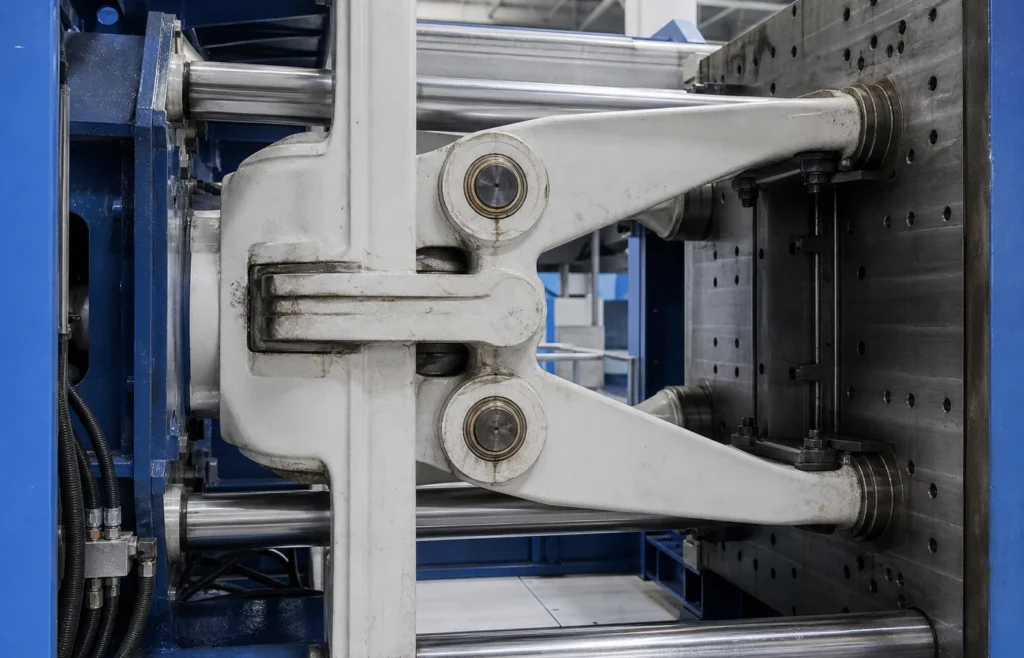
- Construction equipment linkages: boom, bucket and articulation joints, where the load is enormous and the movement is a slow swing.
- Steering and suspension joints: articulating connections carrying heavy load through small angles.
- Agricultural machinery linkages: three-point linkages and implement pivots taking shock load in the field.
- Structural and bridge bearings: articulated supports that move slowly and rarely but must carry the structure permanently.
- Maintenance and repair (MRO): replacing a failed bearing where the original designation, clearance group and sealing have to be matched exactly.
How to Specify GE ES-2RS Series Sealed Spherical Plain Bearings for Your Application
- Bore: Start from the bore the shaft or housing gives you — this series is catalogued from 20 mm to 80 mm — then check the outer diameter and width against the space available. The boundary dimensions are fixed by the standard, so they are the same from any manufacturer; the load ratings and limiting speeds are not, and belong to the specific bearing being supplied.
- Lubrication path: Steel-on-steel types (GE…ES) have a lubrication hole and groove in the outer ring. Line them up with the grease supply in the housing, or the bearing is unlubricated from the day it is fitted.
- Sliding combination: Steel on steel (GE…ES) carries the highest load and needs a lubrication path and a relubrication schedule. Steel on a PTFE composite liner (GE…ES-2RS and maintenance-free types) needs no relubrication at all but has a lower permissible load and a temperature limit set by the liner.
- Load and movement: Specify against the static rating and the pv limit for the liner, not against a dynamic rating: the type is defined by slow oscillation, so contact pressure and sliding speed together set the life.
- Misalignment angle: The permissible tilting angle is a catalog figure for each series. Exceeding it brings the inner ring shoulder into contact with the outer ring edge, which is a hard stop and a fast failure.
- Designation and suffixes: State the complete designation including every suffix. The base number gives the type and the boundary dimensions; the suffixes carry the sealing, the cage, the clearance group, the tolerance class and any special execution — and two bearings whose base numbers match but whose suffixes differ are not interchangeable.
- Clearance and tolerance: State the running clearance or fit class the assembly requires, together with the tolerances of the mating parts that produce it. For this type the clearance is created by the parts around the bearing rather than being built into it, which is precisely why it has to be written down.
- Seal or shield: State open, shielded (ZZ, 2Z) or sealed (2RS, 2RZ). A shield is non-contacting: it excludes coarse contamination and costs nothing in speed. A contact seal excludes fine dust and water and retains grease, but it rubs — it adds drag, raises the running temperature and lowers the permissible speed. Sealed bearings are also greased for life and cannot be relubricated.
- Cage: not applicable: This part has no cage and no rolling elements to separate, so the equivalent decision is the sliding material or liner. That is stated above, and it plays the same role: it is what sets the temperature limit and the lubrication requirement.
- Shaft and housing fit: Specify the seat tolerances, not just the bearing. The rule is that the ring which rotates relative to the load direction takes the interference fit: for a rotating inner ring under normal radial load the shaft seat is typically k5 or k6 with the housing bore H7, and where the outer ring rotates the interference moves to the housing (N7 or P7) with a clearance fit (g6) on the shaft. Heavier loads and hollow shafts move the fits tighter. A correctly chosen bearing in the wrong fit fails anyway — too loose and the ring creeps and frets its seat, too tight and the interference consumes the internal clearance and the bearing runs preloaded.
- Standard: Boundary dimensions are to DIN ISO 12240-1 series K / DIN 648 series E. Quoting the standard on the order guarantees the mounting dimensions are interchangeable between suppliers — it does not standardize load ratings, limiting speeds or internal design, which remain manufacturer-specific.
Mounting & Assembly Practice
- Press into the housing bore on the outer ring only, supported over its full face; force through the inner ring passes through the sliding surface and marks it.
- On steel-on-steel types, line up the lubrication hole and groove in the outer ring with the grease supply and relubricate on a schedule from the first day of service.
- Clamp the inner ring axially between the fork faces so the bolt does not carry the load in bending, and so the joint articulates on the spherical surface rather than on the bolt.
- Keep the sealing in place. These bearings sit in the dirtiest positions on a machine, and contamination in the sliding gap is the usual cause of a short life.
Common Selection Mistakes with GE ES-2RS Series Sealed Spherical Plain Bearings
- Using a spherical plain bearing where the joint actually rotates continuously. It is designed for oscillation; continuous rotation exceeds the pv limit and wears the surface through.
- Greasing a PTFE-lined maintenance-free bearing. The liner is designed to run dry, and grease carries abrasive dust into the sliding gap where it works as a lapping compound.
- Ignoring the liner temperature limit, which is far lower than the steel around it.
- Sizing this bearing from the boundary dimensions alone. Load ratings and limiting speeds are manufacturer-specific for this series and are deliberately not published here — take them from the catalog of the bearing actually being supplied and calculate the life against them.
Where GE ES-2RS Series Sealed Spherical Plain Bearings Are Not the Right Choice
- Not for continuous rotation and not for speed. There are no rolling elements — everything is sliding contact, and the pv limit is reached quickly.
- Not for high-frequency oscillation without checking pv; small, fast movements generate heat in the sliding surface with nothing to carry it away.
- Maintenance-free liners are not for high temperature: the liner, not the steel, sets the limit.
- Not where a bolt through the bore is expected to carry the load in bending — the joint must clamp on the inner ring faces.
- The alignment capability is for a static angle between the shaft and the housing seat; it is not a licence to leave a shaft line unaligned, and it does not absorb misalignment that changes every revolution.
- A 2RS contact seal rubs on the inner ring: it adds drag, raises the running temperature and caps the permissible speed. Where the position is already near its speed limit, choose a shielded or open bearing and seal the housing instead.
- A sealed-for-life bearing cannot be relubricated. Where the calculated grease life is shorter than the required service life of the machine, that bearing is the wrong choice however good the sealing is.