Skip to content
info@bushingbearings.com +86 15999653684

Needle Roller Bearings · ISO 1206 / DIN 617 · Application guide

What Are NKI Series Machined Ring Needle Roller Bearings Used For?

Typical applications, the industries that specify nki series machined ring needle roller bearings in 5 mm to 100 mm bore, how to state the designation, clearance, sealing, cage and fit on an order, and where a different bearing type is the right answer.

NKI Series Machined Ring Needle Roller Bearings are used for carrying a high radial load in the smallest radial section of any rolling bearing — a needle assembly is only a few millimetres larger in diameter than the shaft it runs on. Boundary dimensions are to ISO 1206 / DIN 617, and selection is driven by the radial space available first, and then by whether the shaft and housing can serve as hardened raceways or an inner ring and a machined outer ring are needed.

Primary duty
Carrying a high radial load in the smallest radial section of any rolling bearing — a needle assembly is only a few millimetres larger in diameter than the shaft it runs on
Load direction
Radial only
Bore range
5 mm to 100 mm
Boundary dimensions
ISO 1206 / DIN 617
Category
Needle Roller Bearings

Application notes are general engineering guidance. Basic load ratings, limiting speeds and permissible misalignment vary between manufacturers for the same designation — verify them against the catalog of the bearing actually being supplied, and against your own bearing life calculation.

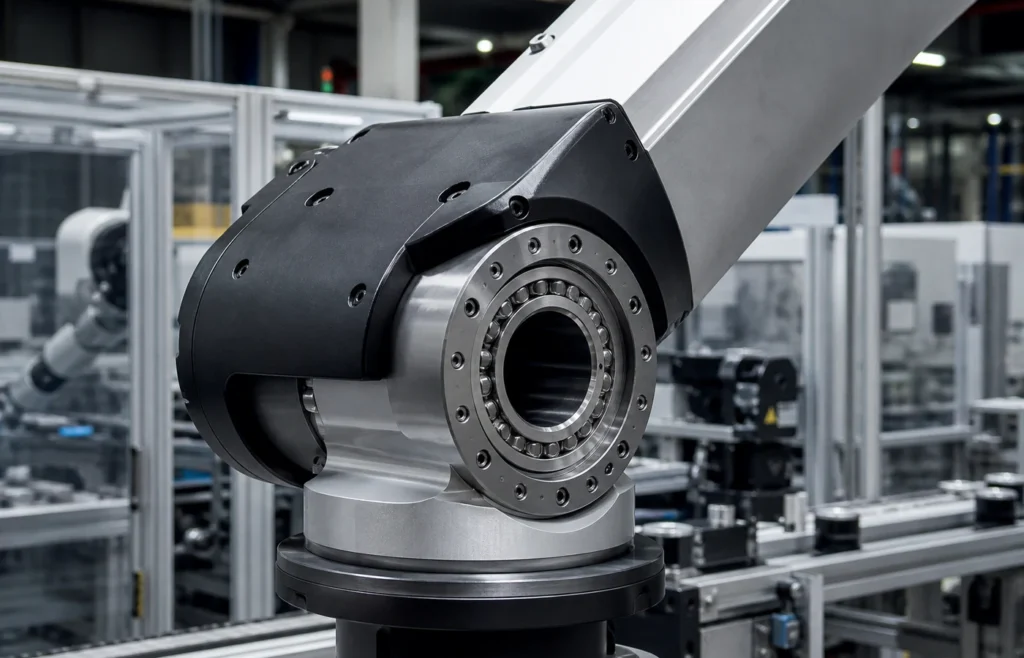
Robot arm joint bearing — a typical application for NKI Series Machined Ring Needle Roller Bearings
A typical service position for NKI Series Machined Ring Needle Roller Bearings.

Application guide for NKI Series Machined Ring Needle Roller Bearings to ISO 1206 / DIN 617. The core duty of the type is carrying a high radial load in the smallest radial section of any rolling bearing — a needle assembly is only a few millimetres larger in diameter than the shaft it runs on. A long, small-diameter roller has a large contact length and almost no radial height, so the bearing fits where the space between shaft and housing is a few millimetres and a ball bearing simply will not go. The typical industries, the specification checklist, mounting practice and the exclusion cases are set out below. This series is catalogued from 5 mm to 100 mm bore; the full table of boundary dimensions is further down the page.

Typical Applications for NKI Series Machined Ring Needle Roller Bearings

The machine positions and sectors where this type is specified:

  • Automotive transmissions: idler gears, shafts and thrust positions throughout a gearbox where radial space is tight everywhere.
  • Pumps and compressors: eccentric drives and rocker arms with heavy radial load in a small envelope.
  • Cam and track roller mechanisms: cam followers and track rollers where the outer ring runs directly on a track or a cam.
  • Steering and control mechanisms: oscillating pivots that must be compact and low-friction.
  • Maintenance and repair (MRO): replacing a failed bearing where the original designation, clearance group and sealing have to be matched exactly.

How to Specify NKI Series Machined Ring Needle Roller Bearings for Your Application

  • Bore: Start from the bore the shaft or housing gives you — this series is catalogued from 5 mm to 100 mm — then check the outer diameter and width against the space available. The boundary dimensions are fixed by the standard, so they are the same from any manufacturer; the load ratings and limiting speeds are not, and belong to the specific bearing being supplied.
  • Inner ring option: NA and NKI types include an inner ring; RNA runs directly on a hardened shaft. Choose from whether the shaft can be hardened and ground, and remember that the inner ring adds to the radial section.
  • Bearing form: Three forms, three different specifications. A drawn cup (HK, BK) is a thin pressed outer ring that takes its finished size from the housing bore — so the housing tolerance is part of the bearing. A machined ring type (NA, RNA, NKI) has a rigid outer ring and, in the NA and NKI forms, its own inner ring. A cage-and-roller assembly (K) has no rings at all and runs directly on hardened shaft and housing raceways.
  • Raceway hardness and finish: Where the bearing runs directly on the shaft or the housing, that surface is a raceway: harden it to 58–64 HRC with adequate case depth and grind it to a fine finish. This is not an installation detail, it is half the bearing.
  • Designation and suffixes: State the complete designation including every suffix. The base number gives the type and the boundary dimensions; the suffixes carry the sealing, the cage, the clearance group, the tolerance class and any special execution — and two bearings whose base numbers match but whose suffixes differ are not interchangeable.
  • Clearance and tolerance: State the running clearance or fit class the assembly requires, together with the tolerances of the mating parts that produce it. For this type the clearance is created by the parts around the bearing rather than being built into it, which is precisely why it has to be written down.
  • Sealing arrangement: This type is supplied open, so the sealing belongs to the housing around it. Specify the shaft seal, flinger or labyrinth that will keep the lubricant in and contamination out — with an open bearing, the sealing arrangement, not the bearing, decides how long it survives its environment.
  • Cage material: State the cage. Pressed steel is the default and suits most duties; machined brass takes shock, high temperature and poor lubrication better and is used in large and heavily loaded bearings; polyamide is quiet, light and low-friction but has a temperature limit of about 120 °C and is attacked by aged oil. The cage is not a detail — it is the component that most often sets the real temperature limit of the bearing.
  • Shaft and housing fit: Specify the seat tolerances, not just the bearing. The rule is that the ring which rotates relative to the load direction takes the interference fit: for a rotating inner ring under normal radial load the shaft seat is typically k5 or k6 with the housing bore H7, and where the outer ring rotates the interference moves to the housing (N7 or P7) with a clearance fit (g6) on the shaft. Heavier loads and hollow shafts move the fits tighter. A correctly chosen bearing in the wrong fit fails anyway — too loose and the ring creeps and frets its seat, too tight and the interference consumes the internal clearance and the bearing runs preloaded.
  • Standard: Boundary dimensions are to ISO 1206 / DIN 617. Quoting the standard on the order guarantees the mounting dimensions are interchangeable between suppliers — it does not standardize load ratings, limiting speeds or internal design, which remain manufacturer-specific.

Mounting & Assembly Practice

  • Press a drawn cup with a mandrel bearing on the marked, closed end face only. The cup wall is thin enough that force applied anywhere else deforms it, and a deformed cup has no clearance left.
  • Support the housing during pressing and lead the cup in square: a cup started at an angle will not straighten as it enters.
  • Check the housing bore tolerance before ordering, not after fitting. The drawn cup conforms to the bore, so an oversize bore leaves the bearing loose and an undersize bore closes the running clearance.
  • Where a cage and roller assembly runs directly on the shaft, verify the shaft hardness and surface finish on the actual part rather than assuming the drawing was followed.

Common Selection Mistakes with NKI Series Machined Ring Needle Roller Bearings

  • Running a needle assembly directly on an unhardened or soft shaft. The rollers indent the surface within hours and the bearing is then running on a corrugated raceway.
  • Ignoring the housing bore form tolerance for a drawn cup, which is what actually sets the bearing clearance.
  • Choosing a drawn cup for a heavy shock load. The pressed section that makes it compact is also what limits it — a machined ring type carries far more.
  • Sizing this bearing from the boundary dimensions alone. Load ratings and limiting speeds are manufacturer-specific for this series and are deliberately not published here — take them from the catalog of the bearing actually being supplied and calculate the life against them.

Where NKI Series Machined Ring Needle Roller Bearings Are Not the Right Choice

  • No axial capacity at all in a radial needle bearing. Thrust must be taken by a shoulder, a thrust washer or a separate thrust needle assembly.
  • Not where the shaft or housing cannot be hardened and ground to raceway quality — use a type with its own inner and outer rings instead.
  • No misalignment tolerance. A long roller on a line contact loads its end the moment the shaft tilts, and needle rollers are the longest rollers in the catalog relative to their diameter.
  • Not for high speed. The rollers are guided loosely and slide against each other and the cage more than in other types.
  • No axial capacity: the shaft has to be located by another bearing, a shoulder or a retaining ring.
  • This type will not tolerate misalignment. The rolling or sliding contact is a line, so a fraction of a degree of tilt moves the whole load onto the end of the contact and the stress concentration there is what fails the bearing.
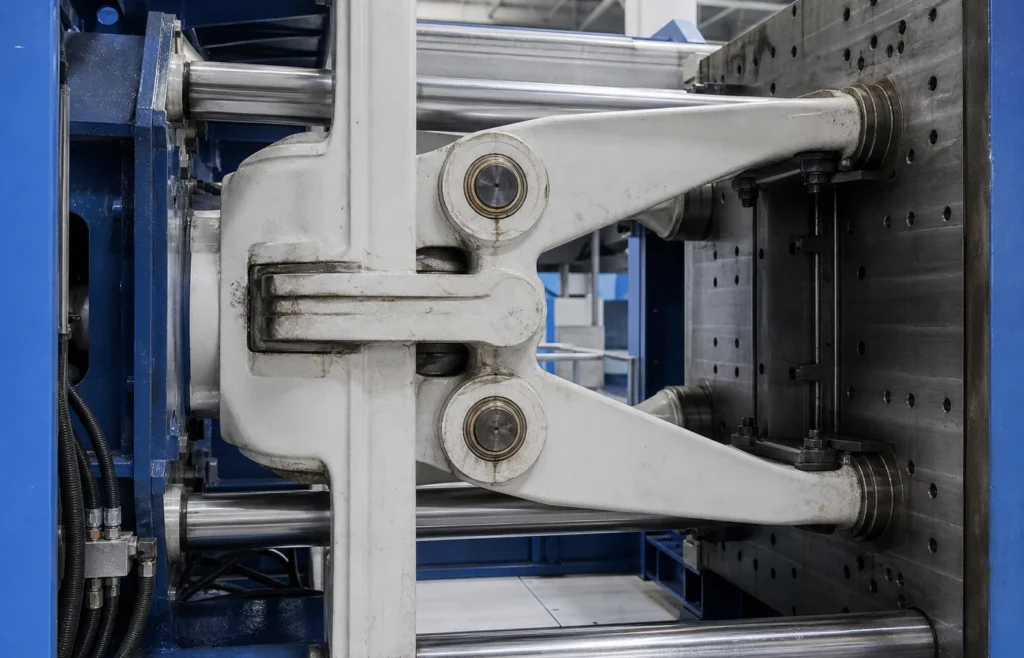
Injection molding toggle bearing — a typical application for NKI Series Machined Ring Needle Roller Bearings
Another position where NKI Series Machined Ring Needle Roller Bearings are specified.

Technical Drawing

Customize the parameters below — every spec field is editable, and the drawing redraws to match the values you choose. Changing the designation snaps the other fields to that size's standard values; you can then override any individual value.

Sends the selected values to the quote form below.

Request a Quote

The form below follows the current technical drawing configuration. Change the drawing values above and the request details update automatically.

Request a Quotation

Specification
Business Information
Our facility

From this page to a production run

The same plant that makes the sample makes the series: forging, heat treatment, grinding, clearance-set assembly and vibration testing in-house, with the lot number travelling in the carton so a field failure can be traced back to a steel heat.

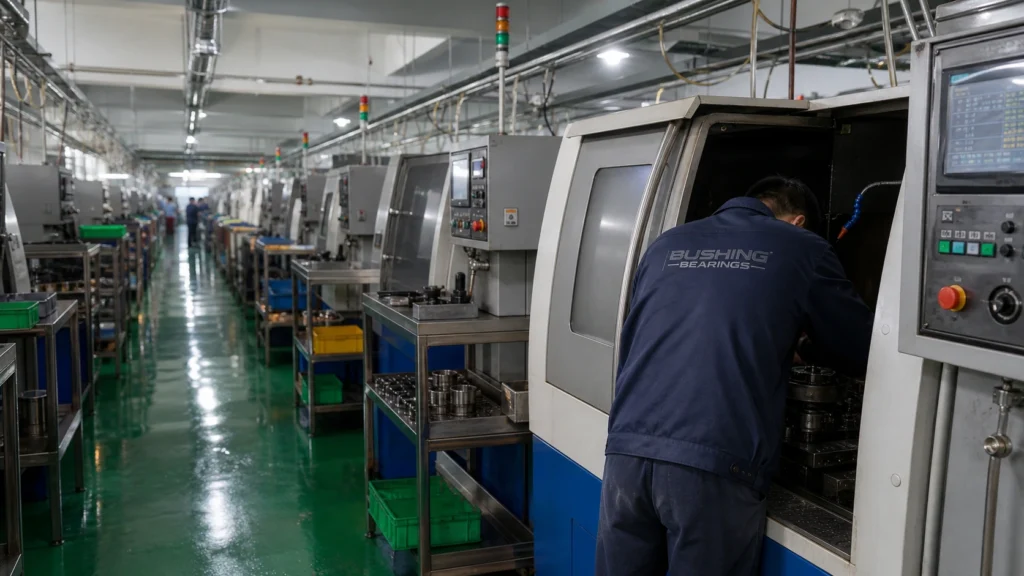
Bearing production line, wide view
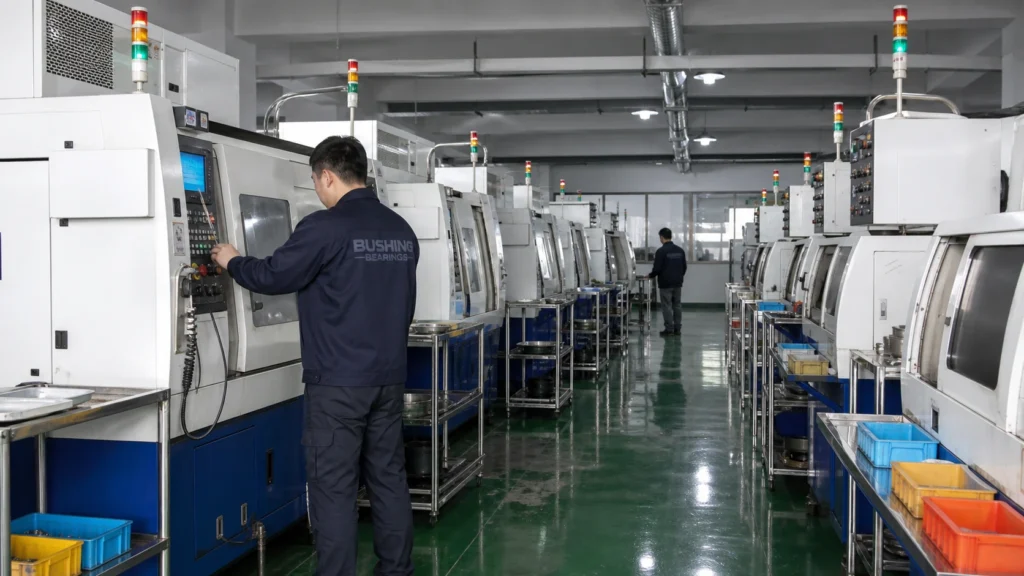
Ring inspection station
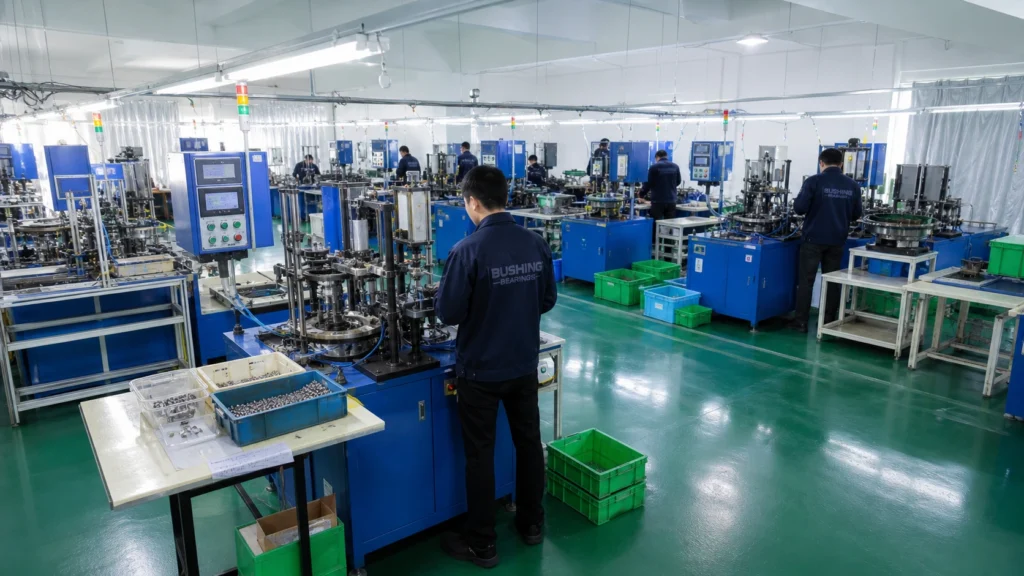
Bearing assembly and clearance setting
Finished bearings staged for packing

Dimensions & Specifications (ISO 1206 / DIN 617)

DesignationBore d (mm)Outer diameter D (mm)Width B (mm)
NKI5/1251512
NKI5/1651516
NKI6/1261612
NKI6/1661616
NKI7/1271712
NKI7/1671716
NKI9/1291912
NKI9/1691916
NKI10/16102216
NKI10/20102220
NKI12/16122416
NKI12/20122420
NKI15/16152716
NKI15/20152720
NKI17/16172916
NKI17/20172920
NKI20/16203216
NKI20/20203220
NKI22/16223416
NKI22/20223420
NKI25/20253820
NKI25/30253830
NKI28/20284220
NKI28/30284230
NKI30/20304520
NKI30/30304530
NKI32/20324720
NKI32/30324730
NKI35/20355020
NKI35/30355030
NKI40/20405520
NKI40/30405530
NKI45/25456225
NKI45/35456235
NKI50/25506825
NKI50/35506835
NKI55/25557225
NKI55/35557235
NKI60/25608225
NKI60/35608235
NKI65/25659025
NKI65/35659035
NKI70/25709525
NKI70/35709535
NKI80/258010525
NKI80/358010535
NKI90/269012026
NKI90/369012036
NKI100/3010013030
NKI100/4010013040

Video: What Are NKI Series Machined Ring Needle Roller Bearings Used For? in use

NKIS 20 YFB | MACHINED NEEDLE ROLLER BEARINGS | ABDUL TRADERS

Third-party video, selected automatically for this topic. It is not produced by Bushing Bearings and is not a specification source — use the tables on this page for dimensional data.

Inside the plant

Manufactured in our own plant

This bearing is forged, hardened, ground, superfinished and clearance-set in-house. The stages below are where its tolerance class, its internal clearance and its noise grade are actually decided.

  1. Bearing ring blanks coming off the forging press
    01

    Forging & turning

    GCr15 bar and tube is cut, heated and forged into ring blanks, then turned to leave a uniform grinding allowance. Forging rather than machining from solid keeps the grain flow following the raceway, which is the surface that eventually fails.

    Blank dimensions and grinding stock checked at set-up and per shift.

  2. Bearing rings entering a continuous hardening furnace
    02

    Heat treatment

    Through-hardening brings GCr15 / 100Cr6 to 58–64 HRC; carburizing case-hardens 20CrMnTi where the section is heavy or the load is shock. Rings are then stabilized so they hold size in service rather than growing in the housing.

    Core and surface hardness per lot; retained austenite and dimensional stability to the ordered temperature class.

  3. Raceway grinding machine finishing a bearing inner ring
    03

    Raceway grinding

    Faces, bore, outer diameter and raceway are ground in sequence on separate machines. This is where the tolerance class is created: P0, P6, P5 or P4 is a grinding outcome, not a sorting outcome.

    Bore and outer diameter deviation, raceway roundness and face runout measured to ISO 492 on every setup.

  4. Superfinishing stones acting on a ground raceway
    04

    Honing & superfinishing

    The ground raceway is honed to remove the grinding lay and bring surface roughness down to a fraction of a micrometre. Raceway finish is what decides whether a lubricant film forms, and therefore what decides bearing life far more than the load rating alone.

    Surface roughness Ra and waviness measured per lot.

Frequently Asked Questions

Do needle roller bearings need an inner ring?

Only if the shaft cannot serve as a raceway. Running directly on the shaft saves the radial space the inner ring would occupy, which is usually the whole reason for choosing needles, but it requires the shaft to be hardened to 58–64 HRC with an adequate case depth and ground to a fine finish. Where the shaft is soft or already machined, specify the type with an inner ring.

What is the difference between a drawn cup and a machined ring needle bearing?

A drawn cup has a thin pressed steel outer ring: it is the most compact and the cheapest, and it takes its finished bore size from the housing it is pressed into. A machined ring type has a rigid turned and ground outer ring, so it carries higher and more shocking loads, holds its own tolerances, and does not depend on the housing bore for its geometry.

How much axial load can a needle roller bearing take?

None. A radial needle bearing has no ribs and no axial contact path. Locate the shaft with a shoulder, a snap ring or a separate thrust bearing — needle thrust washer assemblies exist for that duty and are a different part.

How do I choose the right size of NKI Series Machined Ring Needle Roller Bearings?

Start from the bore the shaft or housing gives you — this series is catalogued from 5 mm to 100 mm — then check the outer diameter and the width against the space available, and confirm the calculated life against the load and speed. The full table of boundary dimensions is on this page.

Can I get a quote for NKI Series Machined Ring Needle Roller Bearings in the size and specification I need?

Yes. Use the technical drawing and quote form on this page to set the size and options, then send the exact configuration — designation, clearance, sealing and cage — to our team for pricing and lead time.